The Eclipse was the Excuse - Chabot Is the Discovery
A lunar eclipse brought people into the Oakland hills. The bigger discovery was a place where redwoods, NASA and three remarkable telescopes have been hiding in plain sight.
A lunar eclipse is worth seeing.
But an eclipse lasts a few hours.
Chabot is still up there the next weekend.
And the discovery begins before you ever reach the parking lot.
The Drive Is Part of It
Highway 1 gives you the coast. Mount Diablo gives you the view. Napa gives you vineyards.
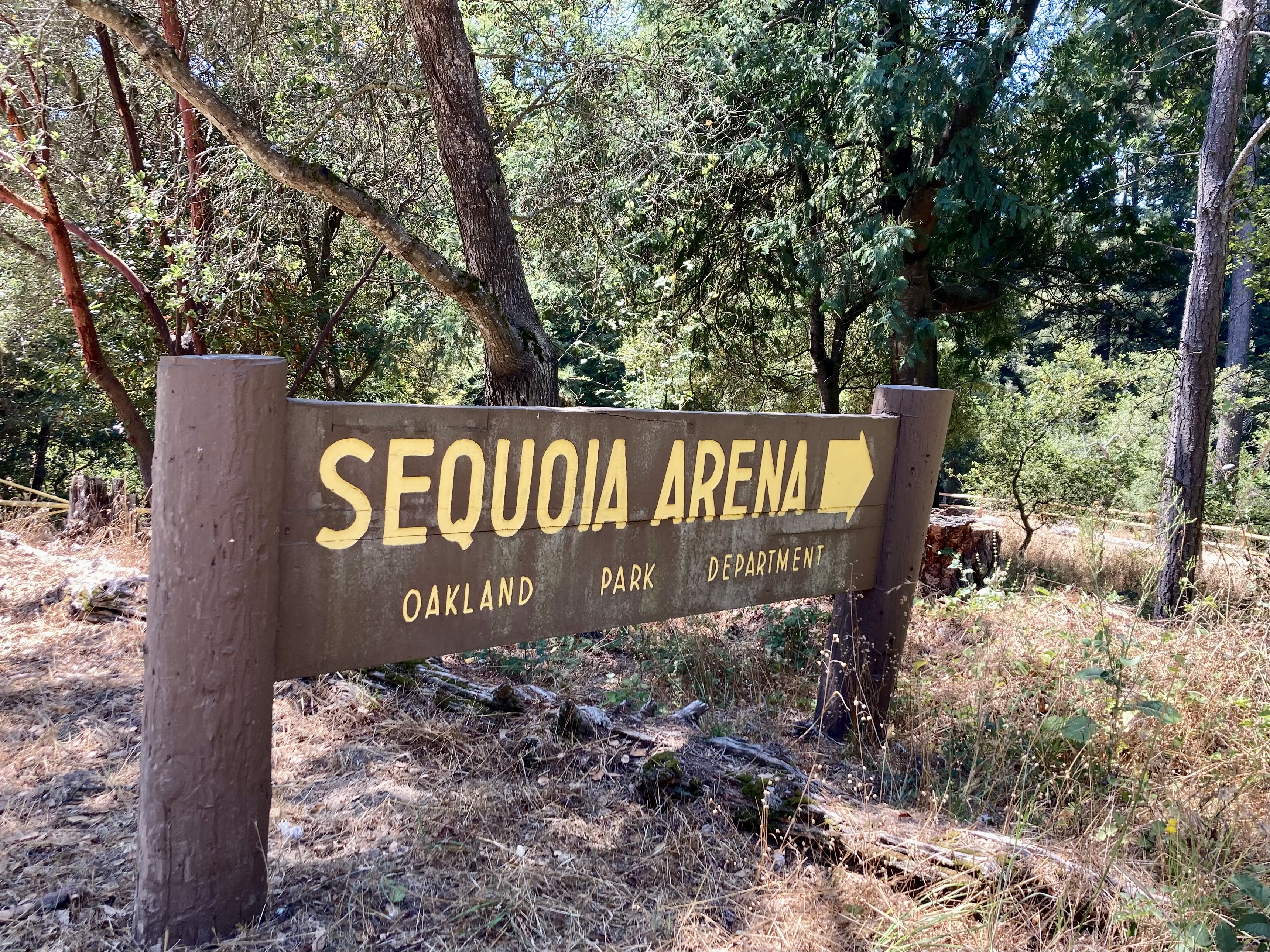
Then there’s the drive into the Oakland hills toward Chabot Space & Science Center.
And this one sneaks up on you.
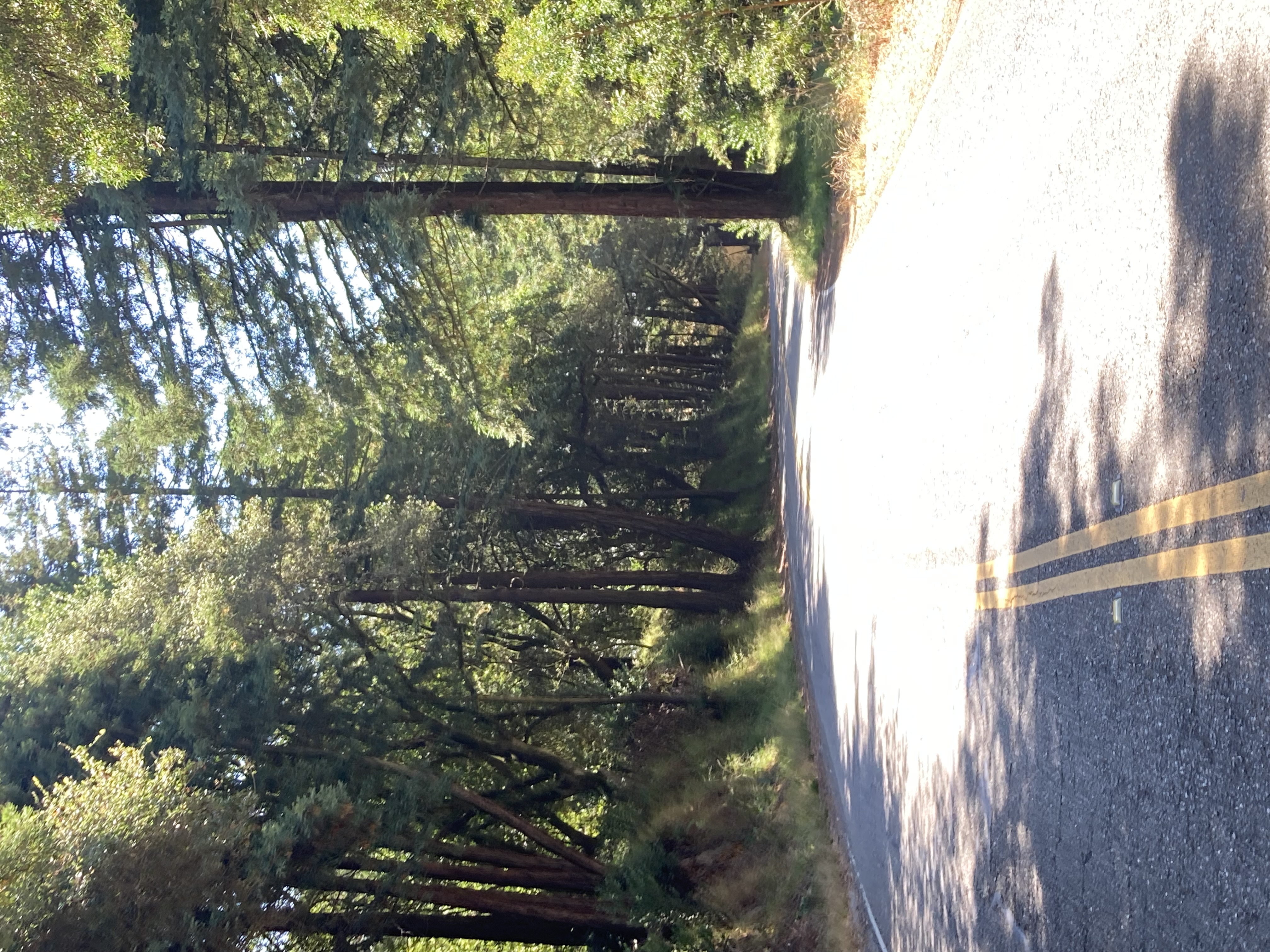
You leave the city behind and start climbing. Houses thin out. The road begins twisting through the hills.
Then the trees get bigger.
Much bigger.
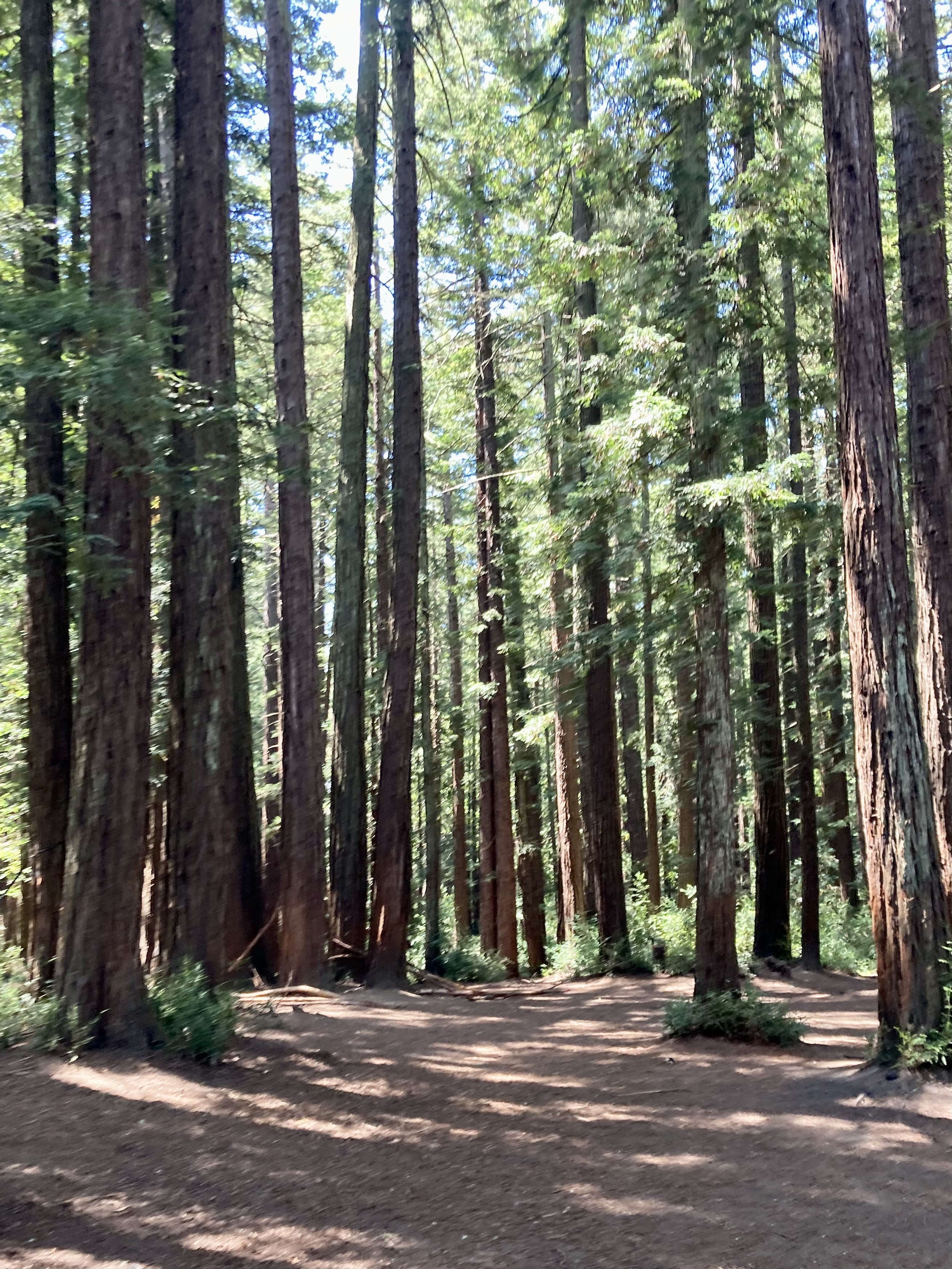
Before long, you’re driving beneath towering redwoods, through stretches of the East Bay that can feel impossibly far removed from the millions of people living just a few miles away.
Keep going.
Because hidden up here, surrounded by this forest, is something that feels like it shouldn’t exist in the middle of a major metropolitan area.
An observatory.
A science center.
Historic telescopes.
NASA.
The partial lunar eclipse on August 27, 2026, was the excuse to make the drive.
Chabot was the discovery.
But Chabot isn’t simply a destination you punch into your GPS and reach as quickly as possible.
If the season and timing allow, make at least part of the drive before dark.
There are places along these roads where the redwoods close in around you, light filters through the canopy and the Bay Area you thought you knew seems to disappear.
You don’t need to drive to Humboldt County to get a taste of that feeling.
It’s sitting in Oakland.
That alone is worth the detour.
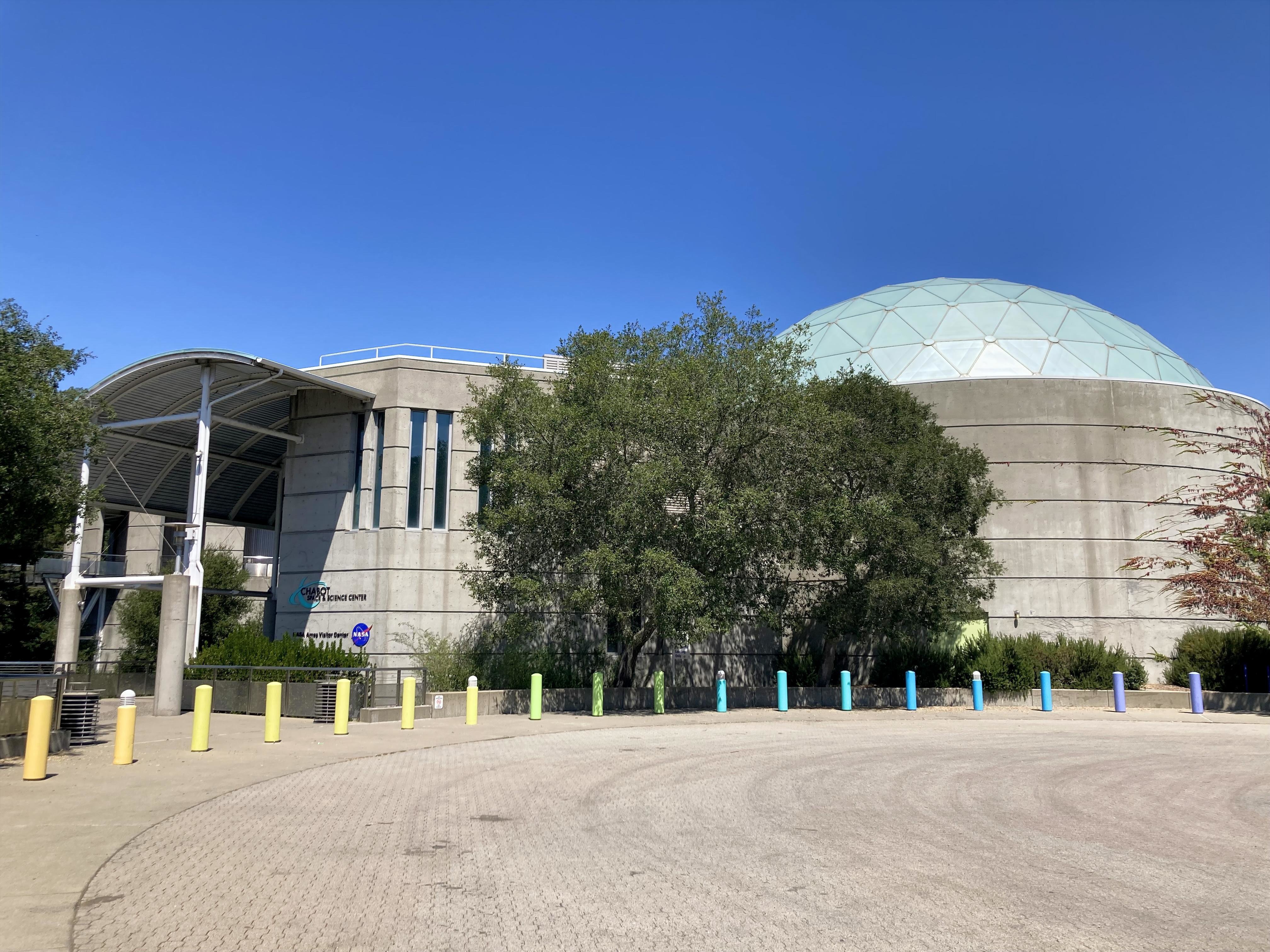
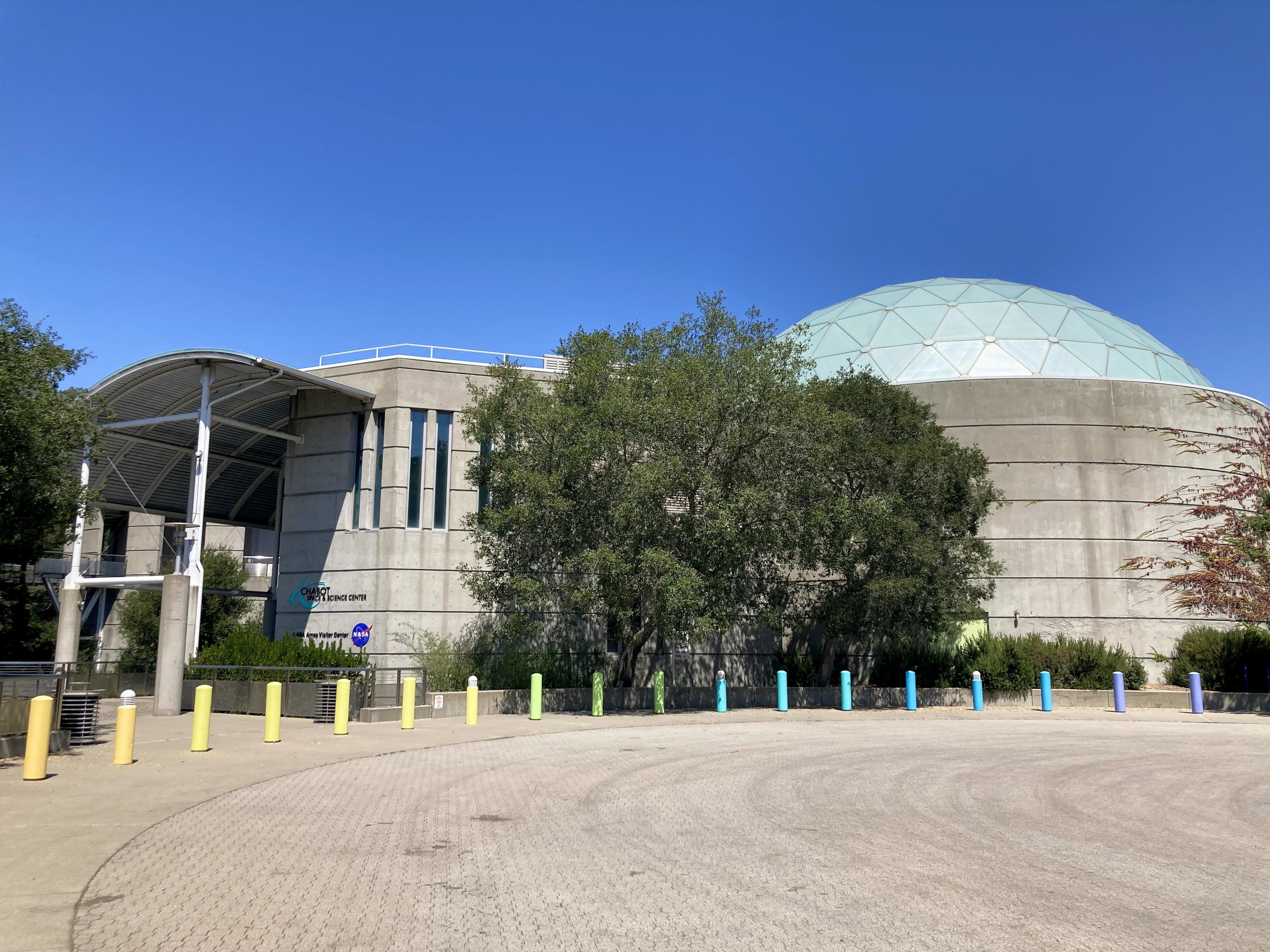
And then you arrive at a space and science center.
That’s when the combination becomes almost surreal.
Redwoods and Telescopes
Most observatories don’t look like this.
Major research observatories are usually associated with high, dry, remote places where scientists can escape atmospheric moisture and light pollution.
Chabot is something different.
It’s an astronomy experience wrapped inside an East Bay forest.
The Observatory Deck sits 1,500 feet above the Bay. Walk one direction and you’re surrounded by trees. Walk another and you’re standing beside telescope domes.
Look through the redwoods and you’re reminded that downtown Oakland and the rest of the Bay Area are still down there somewhere.
Then look up.
That’s the magic of this place.
There are other observatories in forested settings. But the combination here is exceptionally unusual: a major public science center, a working observatory, historic instruments, modern space science and an immersive redwood setting, all sitting above one of America’s largest metropolitan areas.
It feels like two completely different experiences collided on one Oakland hillside.
Then You Meet Rachel, Leah and Nellie
The telescopes make the place even better.
Leah is Chabot’s original 8-inch Alvan Clark refracting telescope, donated by founder Anthony Chabot in 1883.
Rachel is the 20-inch Warner & Swasey refractor commissioned in 1914 and installed at Chabot’s former Mountain Boulevard observatory in 1915. Chabot identifies Rachel as the largest refracting telescope in the western United States regularly open to the public.
That’s a much stronger claim than simply calling it old.
And Rachel isn’t a museum piece sitting behind a rope.
In April 1970, during the final phases of the Apollo 13 crisis, astronomers at Chabot used the 20-inch refractor to track the damaged spacecraft. Chabot says every other observatory that could have helped was clouded over. The Oakland team provided NASA with real-time positional information as the crew prepared to return to Earth.
Think about that for a moment.
A telescope sitting in the Oakland hills played a role in one of the most famous space missions in history.
Then there’s Nellie, Chabot’s 36-inch reflecting telescope. Opened in 2003, it is the observatory’s most powerful instrument and sits beneath a rolling roof that gives it access to 180 degrees of sky.
These aren’t replicas.
They’re part of a living observatory.
That’s a very different experience from simply walking through a science museum.
From Apollo 13 to Other Worlds
And the deeper you get into Chabot, the more unusual the place becomes.
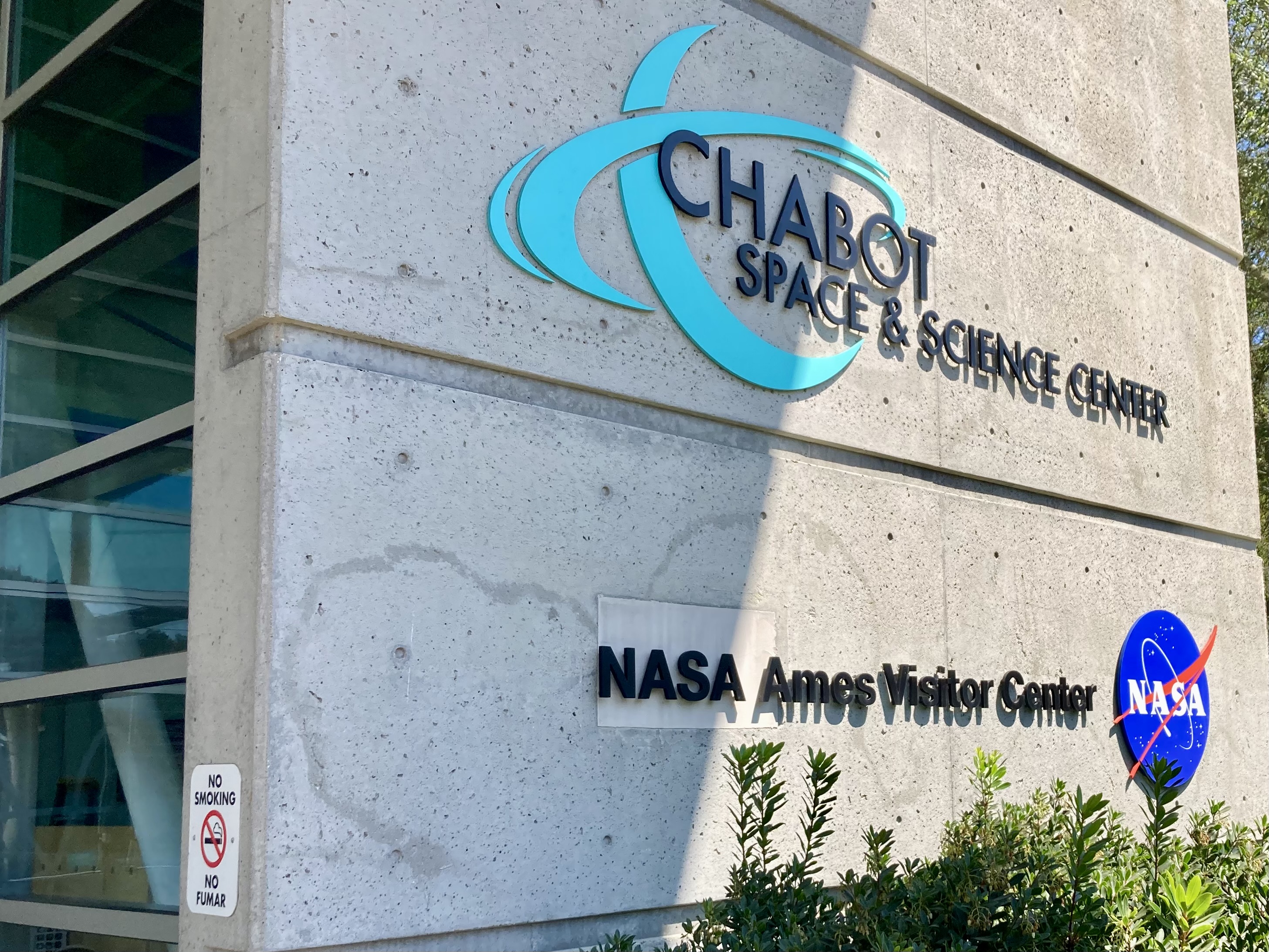
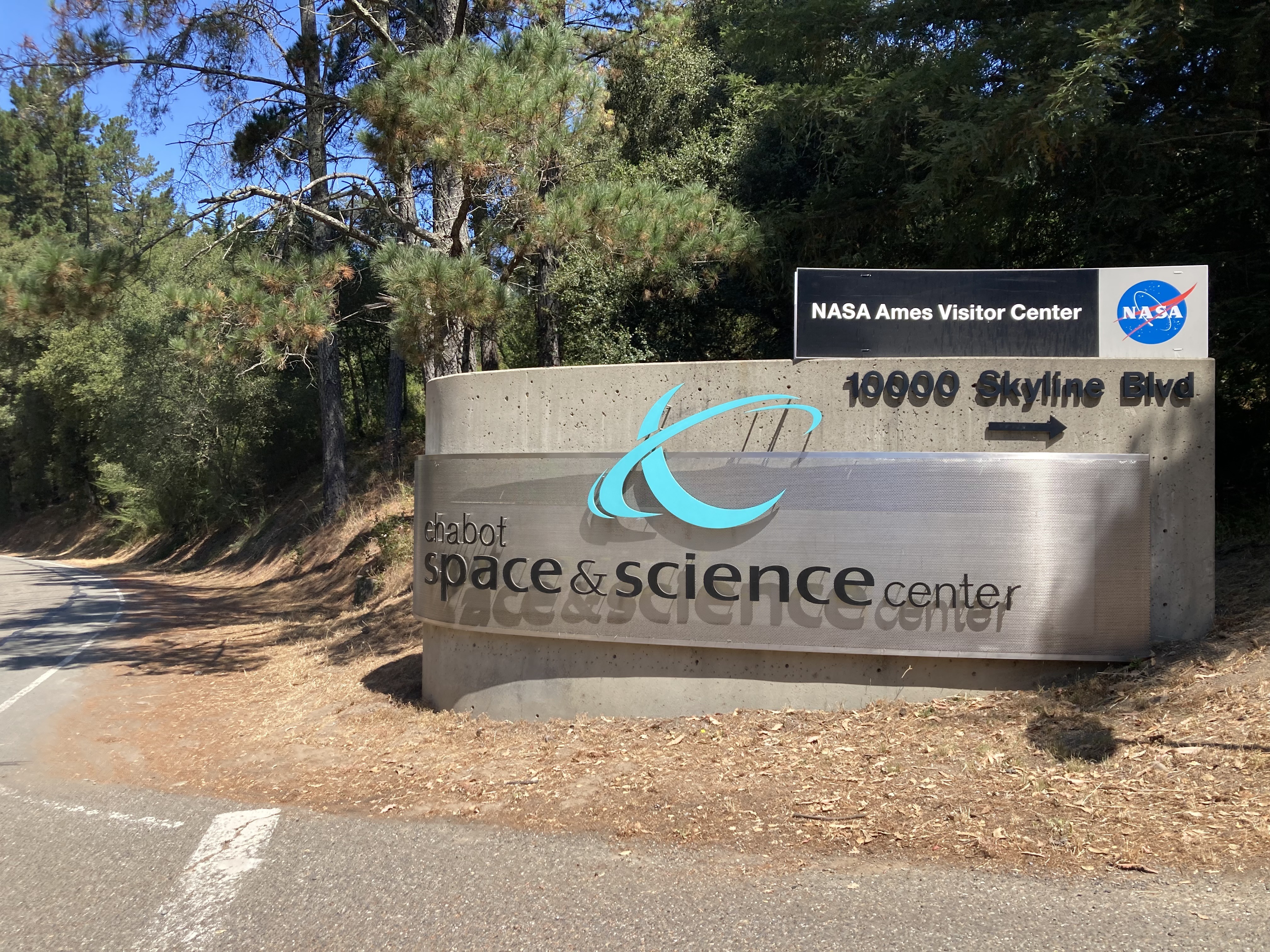
Studio 1 houses the NASA Ames Visitor Center. Visitors can step into the role of NASA scientists, take on hands-on engineering challenges and explore more than 30 objects connected to the past and future of NASA Ames Research Center.
That includes spacesuits from the Mercury and Gemini programs, experimental heat-shield technology and even a fan blade from the world’s largest wind tunnel.
Studio 3 is home to CoLab: Other Worlds, a hands-on space built around a fascinating question:
What would it actually take for humans to live somewhere beyond Earth?
Visitors can design, build, test and rethink their ideas as they work through the kinds of challenges humans may face trying to make a home on another world.
Think about the contrast.
A few minutes earlier, you were driving beneath towering redwoods.
Outside sits a telescope that Chabot says helped track Apollo 13 on its journey home.
Inside, you’re imagining what it might take for humans to build homes on other planets.
Chabot also has a full-dome planetarium, with shows scheduled throughout general-admission hours.
Past, present and future start running together up here.
An 1883 telescope.
Apollo 13.
NASA Ames.
Other worlds.
All surrounded by redwoods in the Oakland hills.
Picture It
On Thursday, August 27, 2026, Chabot hosted a watch party for a deep partial lunar eclipse.
The city was below.
The redwoods were going dark.
Historic telescope domes sat nearby.
Rachel—the telescope connected to Apollo 13—was only steps away.
And above the trees, the moon moved deep into Earth’s shadow.
At about 9:13 p.m. PDT, 96.3% of the moon’s disk was inside Earth’s umbra, the darkest part of the shadow.
That was a moment.
Not because it was one of the world’s rarest astronomical events.
Because of everything surrounding it.
The eclipse ended that night.
The reason to discover Chabot did not.
What to Know Before You Go
Chabot Space & Science Center is at 10000 Skyline Boulevard in Oakland.
Daytime Hours and Admission
Chabot currently offers general admission from 10 a.m. to 5 p.m., Wednesday through Sunday. Tickets are $24 for adults; $19 for youth ages 2–12, seniors and students; and free for children under 2. Festivals and other special events may require separate tickets.
Hours and prices can change, so check Chabot’s official admission page before making the drive.
The Free Telescope Nights You Should Know About
Every Friday and Saturday night, weather permitting, Chabot opens its Observatory Deck for free telescope viewing from 7:30 to 10:30 p.m.
That may be the most useful thing to know about Chabot.
You don’t need to wait for an eclipse or a special event. On a clear weekend night, Chabot astronomers point the telescopes toward stars, planets and other objects in the sky and invite the public to look.
If you want to explore the indoor exhibits and return for nighttime viewing on the same day, plan for the gap: regular museum hours end at 5 p.m., and free telescope viewing begins at 7:30 p.m.
Check the Weather on the Hill—Not Just at Home
Here is the catch that can save you a disappointing drive.
Chabot has its own microclimate, and the telescopes are sensitive to moisture. If humidity rises above 90%, Leah and Rachel close to protect their lenses. Nellie closes when humidity reaches 85% or higher. All the observatories close when it rains, and clouds can limit what there is to see even when the domes remain open.
Check Chabot’s Weather Station and live webcam shortly before leaving. Humidity on the hill can change quickly.
That is the playbook:
Check the sky. Check the humidity. Then make the climb.
Missed It? Here’s When to Look Up Again
If you missed the August 2026 eclipse party at Chabot, the next lunar eclipse visible from Oakland will arrive on the night of August 16–17, 2027. It will be a penumbral eclipse—the most subtle kind—so expect a faint dimming rather than another dramatic red moon.
The evening of January 11, 2028, will bring a slight partial lunar eclipse, with only a small sliver of the moon entering Earth’s darker shadow.
A total lunar eclipse will occur on December 31, 2028, but the Bay Area will see only its partial opening stages before the moon sets.
The next solar eclipse visible from Oakland will be a partial eclipse on January 14, 2029. Certified eclipse glasses will be essential; unlike a lunar eclipse, a solar eclipse is never safe to watch directly without proper eye protection.
The next total lunar eclipse visible from California arrives on June 26, 2029.
Whether Chabot hosts watch parties for any of these dates remains to be seen. But if the August 2026 eclipse proved anything, it’s that the observatory knows how to turn a night in the sky into a reason to head into the redwoods.
Keep an eye on Chabot’s calendar—and ours.
The Bay Area Hiding in Plain Sight
We spend a lot of time looking for the next great Bay Area experience.
Sometimes we assume that means finding something new.
It doesn’t.
Sometimes it means discovering something that has been sitting here all along.
That’s what makes Chabot interesting to me.
It’s not simply a science center.
It’s not simply an observatory.
And it’s not simply a drive through the redwoods.
It’s all three.
Come during the day and explore NASA Ames, the planetarium and the hands-on exhibits. Come back on a Friday or Saturday night and look through telescopes that have been opening the sky to the public for generations.
The moon doesn’t need to be turning red.
There doesn’t need to be a special event.
The redwoods will still be there.
Rachel, Leah and Nellie will still be waiting beneath their domes.
And when you drive back down through those dark trees afterward, I suspect you’ll be thinking the same thing I was:
How did I not know this was up here?
It’s out there. Let’s go find it.
— SF Bay Weekend
SF Bay Weekend Newsletter
Love the stories behind Bay Area experiences?
Join the newsletter for Mike's weekly Top 10 and the subscriber-first story from wherever the weekend takes him.
Find the Magic.
More from The Weekend Edit
Sunday Drives: Pumpkins, Country Roads and Friendly Faces at Smith Family Farm
*Two visits to a Brentwood farm brought fresh strawberries, pumpkins on the vine, live music—and a recommendation for my next drive.* The drive out to Smith Family Farm reminded me
 The Weekend Edit
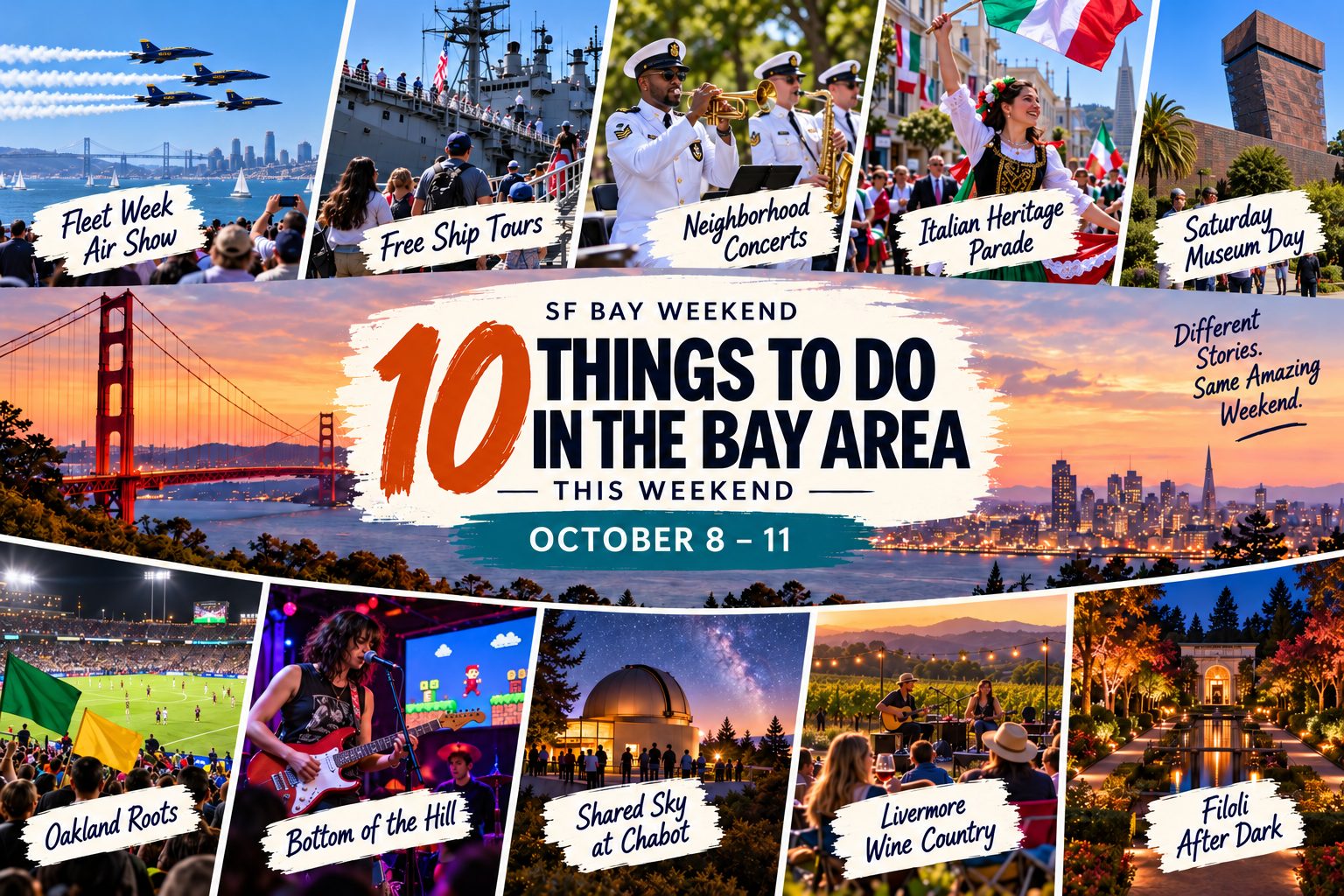
Mike’s 10 for the Weekend - October 8–11, 2026
Fleet Week gives San Francisco a reason to look up this weekend. Along the waterfront, you can watch the air show, step aboard a visiting ship or catch a military band—all without
Sunday Drives: Pumpkins, Country Roads and Friendly Faces at Smith Family Farm
Two visits to a Brentwood farm brought fresh strawberries, pumpkins on the vine, live music—and a recommendation for my next drive. The drive out to Smith Family Farm reminded me o
The Weekend EditMike’s 10 for the Weekend - October 8–11, 2026
Fleet Week gives San Francisco a reason to look up this weekend. Along the waterfront, you can watch the air show, step aboard a visiting ship or catch a military band—all without